
The Future Of Craft Beer

The R-Haus Craft Beverage System is a true industry game-changer, fundamentally redefining craft beer production. It tackles the industry’s biggest hurdles—market contraction, high operational costs, and environmental concerns—by offering a “Minimum Footprint, Maximum Return” model. This innovative system eliminates the need for significant capital investment from venue partners, allowing restaurants, bars, and other establishments to offer fresh, on-site craft beer with zero upfront costs and immediate positive cash flow. With patented bag-to-bag brewing, minimal labor requirements, and an impressive 90%+ gross margin, R-Haus democratizes craft brewing and makes it accessible to a wider range of businesses.

Beyond its financial benefits, the R-Haus system boasts revolutionary environmental sustainability and consistent quality through its Virtual Brewmaster™ Technology. It achieves an astounding 87.5% water reduction compared to traditional brewing, eliminates chemical waste, and has a minimal physical footprint. This commitment to sustainability resonates strongly with modern consumers, particularly Gen Z and Millennials. The 24/7 cloud-connected monitoring ensures consistent, high-quality beer, transforming brewing from an art dependent on individual expertise into a scalable, technology-enabled platform. R-Haus isn’t just improving brewing; it’s reimagining it entirely, leading the future of distributed, sustainable, and technology-driven craft beer.


Business Leverage Beer Club Memberships

Craft beer breweries are increasingly becoming strategic engines of value for experience-driven companies like Levy Restaurants and Penn Entertainment. With guests demanding fresher, more local, and more sustainable options, on-site craft beer transforms a basic commodity into a branded, high-margin asset. By brewing hyper-local, story-driven beers—like team-branded stadium lagers or property-specific casino ales—breweries help venues differentiate their guest experience, command premium pricing, and align with ESG and sustainability goals. The R‑Haus model amplifies this by enabling ultra-efficient, low-footprint, on-premise brewing that delivers 90%+ gross margins and compelling sustainability metrics, turning beer programs into powerful levers for both revenue and brand.

Within this context, modern breweries and venues increasingly want to leverage craft beer clubs to enhance their bottom line and deepen loyalty. Craft beer clubs, app-based memberships, and “What’s On Tap” programs create recurring engagement: members get first access to new releases, seasonal brews, and limited collaborations, while operators gain rich data on preferences, visit frequency, and response to promotions. For PENN, that might look like a PENN Play Beer Club tied directly into loyalty tiers and ESPN BET activity; for Levy, fan- and venue-specific beer clubs tied to season ticket holders and premium club members. In both cases, craft beer clubs turn one-off pints into ongoing relationships, driving repeat visits, higher per-capita spend, and a predictable, high-margin revenue stream that sits at the intersection of hospitality, loyalty, and digital engagement.

The Value Of A Beer Club Membership

The Opportunity

The R-Haus Brewing platform turns any bar, restaurant, theater, airport lounge, or entertainment venue into a high-margin, on-site craft brewery—without the cost, complexity, or risk of actually becoming a brewery. With zero capital investment required, venues tap into a “vending machine” style brewing system that can generate $1.2M–$1.5M+ in annual beer sales at 90%+ gross margins, far above traditional breweries. The patented bag-to-bag brewing process uses pre-prepared malt extract and single-use brew bags, so there’s no milling, boiling, or cleaning, and anyone from a bartender to a chef can reliably produce exceptional beer. Virtual Brewmaster™ technology monitors every tank in real time, ensuring consistent quality, minimal downtime, and quick remote diagnostics—all from a compact footprint of as little as 100 square feet.

The Benefits

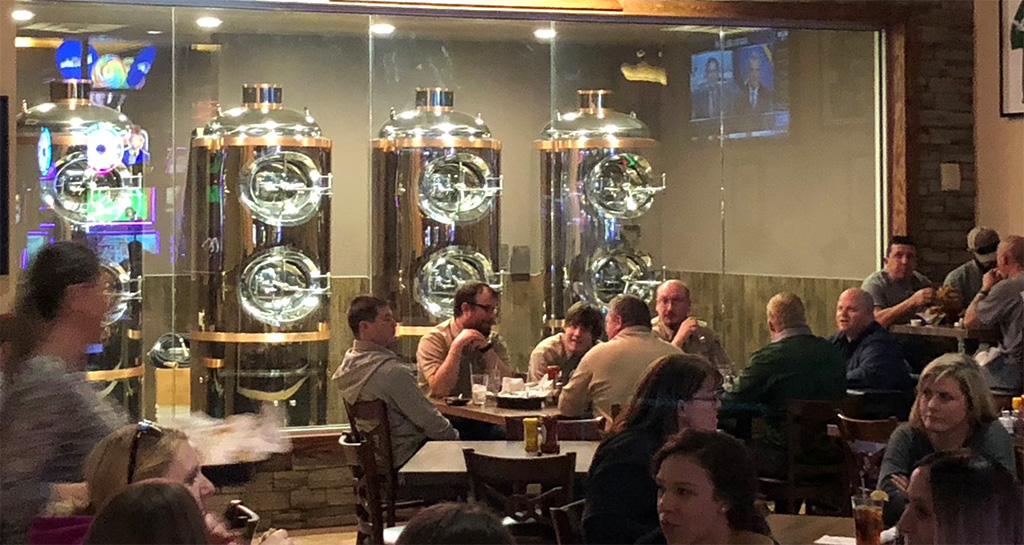
For business patrons, the value is just as compelling. They get ultra-fresh, locally brewed craft beer made right where they’re enjoying their meal, movie, game, or flight, often with rotating styles and options like non-alcoholic beers, kombucha, seltzers, and ciders. The system’s radically lower water use—just 1.5 gallons per gallon of beer versus 12 for traditional brewing—and elimination of caustic chemicals, steam, and heavy waste make R-Haus an authentically sustainable choice that resonates strongly with Gen Z, Millennials, and eco-conscious guests. Visible tanks and on-site brewing create an experience to talk about and come back for, while visitors can feel good knowing they’re supporting a venue that’s embracing innovation, quality, and environmental responsibility all at once.

We Solve Problems

The R-Haus Craft Beverage System directly attacks the biggest pain points in the craft beer and hospitality industry: high capital costs, thin margins, operational complexity, and mounting environmental pressure. Traditional breweries require $250,000–$1,500,000+ in equipment and build-out, years to reach profitability, and skilled labor to operate and clean. R-Haus removes those barriers entirely with a zero-capital “vending machine” model, where the company owns and operates the brewing equipment and shares revenue with the venue. Its patented bag-to-bag brewing process eliminates milling, boiling, hot-side brewing, and cleaning, slashing ingredient costs to roughly $0.35–$0.55 per pint, delivering 90%+ gross margins, and turning even small spaces (as little as 100 sq ft) into highly profitable beverage centers. Cloud-connected Virtual Brewmaster™ technology monitors temperature, gravity, carbonation, and performance 24/7, reducing downtime, service calls, and the need for in-house brewing expertise—making owners’ lives simpler, more predictable, and far more profitable.

These same innovations translate into meaningful benefits for visitors. Because brewing happens on-site with minimal waste and extraordinary water efficiency (1.5 gallons of water per gallon of beer vs. about 12 for traditional brewing), guests can enjoy fresher, locally produced craft beverages that are genuinely more sustainable. The flexibility of the platform means venues can offer a wide variety of styles, including non-alcoholic options, kombucha, seltzers, and ciders, and rotate offerings regularly—giving visitors more choice and more reasons to come back. The visible brewing setup and “tech-enabled” nature of the system create an engaging experience, while the improved margins for the venue can support better overall service, atmosphere, and value for guests. In short, R-Haus makes it easier and more profitable for operators to serve high-quality, eco-conscious craft beverages, and visitors benefit with better drinks, better experiences, and a smaller environmental footprint.

Curious? Want To Know More?

Ready to revolutionize your venue’s beverage program and unlock unprecedented profitability? Contact us today for a personalized consultation and discover how the R-Haus Craft Beverage System can transform your business with minimal capital investment and maximum return.